
If you’re anything like me, your first few days at the gym were – or will be – rough; everyone there seems to know what they’re doing already, and even the internet seems to just be full of solutions for the experienced gym-goer. Where’s the “workout routine for beginners” that we’re looking for?
Let me tell you friends, that search is over. I’m going to give a guide on how to make the best beginner workout plan you can so that you can start out your weightlifting journey right. We can get into more complicated stuff later, but for now, let’s start with the basics of making a great routine.
Specifically, we’ll cover:
- What a beginner is
- Some basic routine making guidelines
- Some example exercises and stretches to include
Ready? Let’s dive in!
Beginner Breakdown
To start things off, I want to make clear what I define as “beginner” so that we’re on the same page when it comes to making a workout routine for beginners. Medium published an article on how one can determine their lifting level, in which they mention the three most common ways people to try and measure their progress:
- How long you’ve been lifting for
- How strong you are
- How much muscle you have
For the sake of this article we’ll assume that a beginner has only been working out consistently – at least 3 times a week – for between 6 and 12 months, and tends to stick with simple exercises.
That’s still a pretty broad category, and time – or lack of time – doesn’t always make someone a beginner, and neither does sticking to the basics, even though it is more common. As Medium states, “These methods are often less than ideal, and not very accurate when it comes to figuring things out…” but using time as a benchmark will make it a little easier to explain things, just to keep us on the same page.
Now that we have that taken care of and out of the way, let’s get on to some tips!
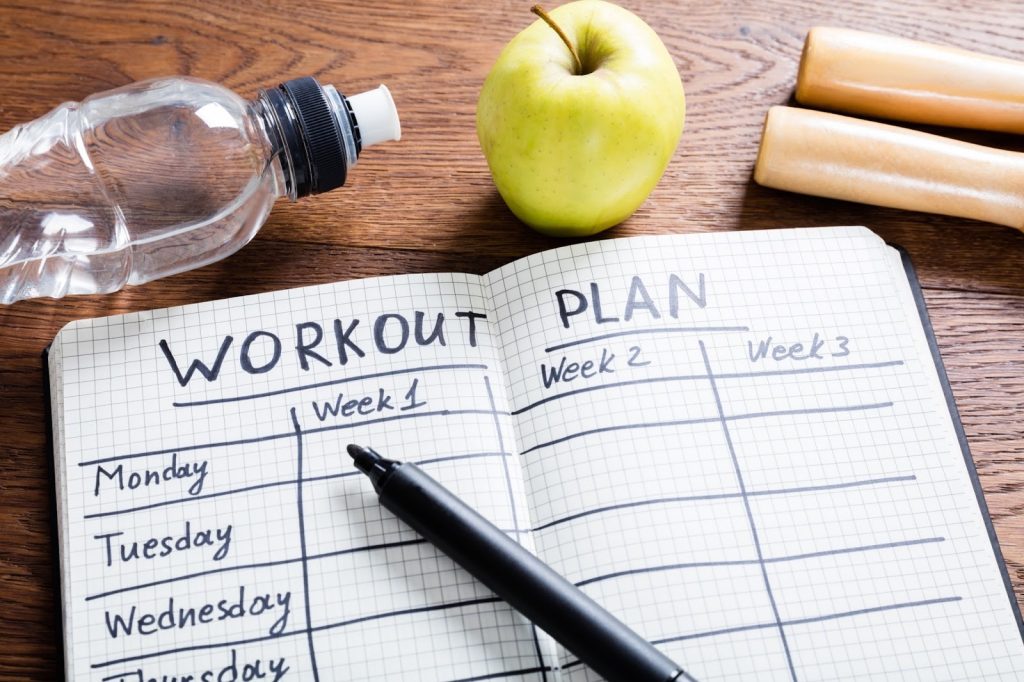
Make Your Routine Balanced
You may have been wondering if there’s a single exercise that you can do to cover all the bases when it comes to making a workout routine for beginners… if you were hoping for a “yes” answer with the holy grail of exercises to boot, I’m afraid you’ll be disappointed.
HelpGuide goes over this point in an article on their website:
“…to get the most benefits from your routine, you want a mix of activities during the course of a week. Otherwise, it’s like a diet consisting only of fruit—healthful as far as it goes, but lacking a lot of the nutrients you’ll find in other foods, such as fish, vegetables, nuts, and whole grains.”
A day of cardio and two days of strength training, for example, can be a good place to start.
Keeping things balanced in your weightlifting routine – or any workout routine – will lead to far greater success for you in the long run than just sticking with one or two exercises. After all, just because it’s a “workout routine for beginners” doesn’t mean that it has to be ineffective.
Remember to Stretch
A workout routine should always include stretches, whether you’re a beginner or not. An article from BrownHealth states:
“Your exercise routine should include stretching to improve circulation and elasticity of muscles before and after activity. Core exercises are always important, because your core muscle group is made up of over 29 muscles in the pelvis, abdomen, and back, providing the foundation for the entire body and needs to be addressed. You should individualize your program by selecting the right exercises for you, or seek the help of a professional trainer.”
If you want some specific stretches that would be perfect to start out with, take a look at this article here:

Listen to Your Body
Our bodies are amazing machines with tons of potential, but they aren’t quite perfect. When problems arise, though, they generally do a good job at letting us know that something’s wrong. If you’re in pain, for example, that’s a sign to stop. Being overly tired is a natural sign that we need to rest. Follow these signals as they come up, and you’ll avoid getting hurt or overstressed in the future. Overtraining can be dangerous!
If you’d like to learn more about that, take a look at this post on overtraining and how to avoid it:
These tips should be enough to get you started, so let’s move on to the example exercises:
Strength Exercises
Strength training exercises help build both muscle and bone mass. Some pretty common ones to use in your workout plan are:
- Squats
- Lunges
- Push-ups
- Pull-ups
- Planks
- Crunches
- Leg Raises
Something great about these is that they’re relevant to everyday activities and they’re simple. All of them can be done without any crazy equipment, but they still can make a huge impact.
Cardio Exercises
Cardio exercises help keep your heart healthy and burn calories at the same time. Here are some good ones to start with:
- Walking
- Jogging
- Running
- Biking
- Swimming
- Hiking
- Jumping rope
A lot of people don’t care for cardio – myself included – but I find that they also boost my energy throughout the rest of the day. Even though they aren’t always the most fun, they’re super important.

Stretching and Mobility
We already covered this briefly, but here are a couple of exercises to keep in mind when it comes to stretching:
- Static stretches
- Dynamic stretches
- Foam rolling
Shaking things up a bit with your stretches will help keep your muscles both relaxed and loose, which will let you do far more in your routine and your day in general.
Wrapping Up
A workout routine for beginners should include stretches and other exercises for many reasons, but one of the main ones is that your first routine tends to shape lasting habits; you need to make sure to build the best habits that you can.
Some of the benefits of following through with your routine are increased strength, energy, and flexibility. In my experience, my confidence has grown through the roof along the way. If you’ve made a plan but are having trouble with sticking to it, we have tips on how to change that.
Whatever the case, now you can make the “workout plan for beginners” that you’ve been looking for, and it’ll be tailored to you and what you feel. Good luck!